Podcast OS
A system for making something worth listening to and building an inbound content engine that compounds around it.

How I Think About Podcasting
The best podcasts in any category share one thing: they're genuinely interesting. Not a marketing vehicle dressed up as a show, not a sales call with intro music; a real conversation between people who know their subject, worth an hour of a listener's time on its own merits.
That's the starting point. Everything else follows from it.
What a Well-Built Podcast Actually Does

It systematically earns search authority
A podcast episode by itself doesn't move a search ranking. A well-researched long-form blog post built from that conversation, targeted to a defined keyword cluster and linked into a coherent content architecture — that does. Over time, a consistent publishing cadence builds the kind of topical depth that search engines and AI answer engines read as genuine expertise.
It produces editorial content your brand owns
Most content programs struggle for material. A podcast solves that problem upstream: every conversation is a primary source. An episode with a sharp guest produces a blog post, social clips, pull quotes, and a perspective on your category that you couldn't manufacture at a desk. Done consistently, it becomes the editorial heartbeat of the brand — the thing that gives everything else something to say. This is the layer Brand & Content OS connects to directly.
It puts you in the room with people worth knowing
A podcast invitation, framed around a guest's expertise and the show's editorial angle, opens doors that cold outreach can't. Practitioners, leaders, and thinkers in your category will have a conversation they'd never take as a sales meeting. Some of those conversations lead somewhere commercially. More of them lead somewhere socially — an introduction, a referral, a relationship that matters later in ways you didn't anticipate. One good guest tends to lead to another. The value of being an active, curious participant in your industry's conversation compounds in ways that are hard to attribute and impossible to manufacture.
It makes you sharper about your own industry
There's a benefit to the host that rarely gets mentioned: you learn things. Asking smart people in-depth questions about their experience, their perspective, and what they're seeing in the market is one of the fastest ways to develop genuine expertise — and that expertise shows up everywhere else. In your writing, your positioning, your sales conversations, your strategic thinking. A brand whose leadership is genuinely curious about the industry it serves is a more interesting brand. The podcast is, among other things, a structured commitment to keeping that curiosity active.
Your Unfair Advantage
Anyone can write a brochure. Anyone can run an ad. Relatively few are willing to put their thinking on camera, sit across from smart people week after week, and let the quality of the conversation speak for itself.
That willingness is its own form of credibility. There's an ethos to someone who shows up publicly, someone who commits to a point of view, invites scrutiny, and does it consistently over time.
In most categories, a well-run podcast with a clear editorial identity is a near-uncontested position.
One Conversation.
A Full Content Engine
Repurposing is built into the production workflow from the start, not bolted on after the fact. A single recorded conversation produces:
Full episode
edited, optimized, distributed to YouTube, Spotify, Apple Podcasts, and RSS
3–5 social clips
formatted for LinkedIn and short-form video, with branded end cards
Episode thank-you asset
a QR code card linking to the guest's specific episode, for email or print follow-up
Long-form SEO blog post
researched, audience-first, built around a target keyword and topic cluster
Guest amplification package
graphics for social media, delivered before launch so the guest can post on day one
Sales context brief
a record of what was discussed, available to the team if a commercial conversation makes sense
Finding Your Editorial Angle
The single most important decision a podcast makes isn't production quality, publishing frequency, or guest roster. It's the editorial angle — the specific, ownable perspective on a subject that tells a potential listener exactly why this show exists and why it's worth their time.
A weak angle produces a show that's hard to describe and harder to recommend. A strong one creates an audience that returns because they know what they're going to get — and refers others because the show has a clear identity they can pitch in a sentence.
That means working through questions like:
What does your brand already have genuine authority to speak about?
Who is the guest that makes this show credible to your target audience?
What is the conversation happening in your industry that nobody is hosting well yet?
What perspective, if you committed to it consistently, would eventually make this show the one people in your category point to?
Every blog post produced from a podcast episode is built against a defined keyword cluster and linked into the site's content architecture, which strengthens the overall search authority of the domain and connects to the topic cluster the brand is trying to own.
A podcast agency will produce your show. This practice builds a content system the show runs inside.
Why This Practice vs. a Podcast Agency
The content connects to the site
The strategy is already built
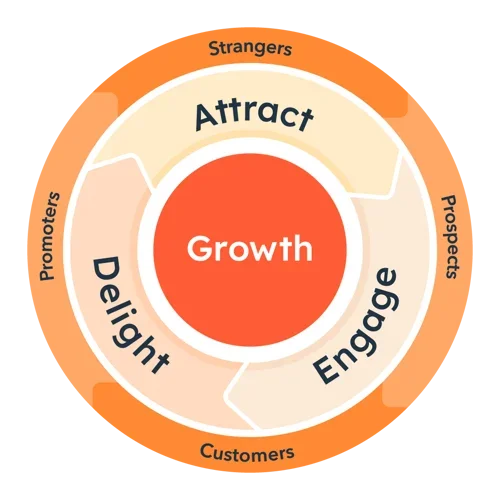
Brand & Content OS and Inbound Sales & Marketing are the philosophies this practice operates from. The messaging foundation, topic cluster strategy, and keyword architecture are considered before the first episode is recorded.
The commercial connection is thoughtful, not forced.
Guest contacts are tracked in CRM so there's a history of the relationship: when it started, what was discussed, what followed. If a conversation leads somewhere commercially, that transition is warm and informed, not awkward.
The Framework
How I Measure Podcast Work
Downloads matter as a reach indicator, but a podcast's real performance shows up across several dimensions — and the most important ones don't reduce to a single number.
1
Content Performance
How are the blog posts ranking? Which social clips are generating engagement, and what can that tell us about which topics and guests are resonating?
2
Audience and guest feedback.
What are listeners telling you — directly, in comments, in DMs, in how they talk about the show to others? What do guests say about their experience?
3
Pipeline influence.
Has organic search traffic growth from podcast content contributed to inbound leads or influenced deals in progress?
What the Connected System Has Produced
$5.9M
of a $10M inbound pipeline from organic content
619%
organic traffic growth in under 12 months
10,000+
organic sessions for a newly launched site in year one
11 SQLs
across 10 email campaigns — one per send on average
See the full record:
Philosophy
"The best sales meeting you'll ever have is the one that doesn't feel like a sales meeting."
There's a version of this that gets built wrong, a show that's really just a prospecting sequence with better audio quality. Guests will feel that, listeners will as well.
The better version starts from genuine curiosity: what does this person know, what has their experience been, what would be interesting to the people who care about this subject? The commercial benefits (the SEO, the relationships, the occasional deal that follows) are there. They're just downstream of making something that earns a listener's time.
Get that right and everything else has a ground to stand on.

Brand & Content OS
The messaging foundation every episode runs on
Explore the System
Inbound Sales & Marketing
How podcast authority becomes pipeline

CRM OS
Where guests become tracked relationships

RevOS
The infrastructure that turns activity into revenue

Success Stories
Real programs, real result